What the Law Says About Appointing the INEC Chairman
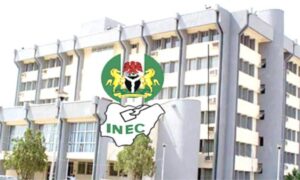
The appointment of a new Chairman for Nigeria’s Independent National Electoral Commission (INEC) has once again ignited nationwide discussion on the process, legality, and transparency behind one of the country’s most sensitive political offices.
As the tenure of the outgoing INEC Chairman comes to an end, attention is shifting to who succeeds him — and more importantly, how the law guides the entire appointment process. For many Nigerians, the question remains: does the current system truly guarantee independence for the Commission, or does it leave room for political influence?
Under the 1999 Constitution (as amended), the authority to appoint the INEC Chairman rests solely with the President, subject to confirmation by the Senate. Section 154 (1) clearly states that the appointment of the Chairman and members of the Independent National Electoral Commission shall be made by the President and shall be subject to confirmation by the Senate.
This provision places the President at the centre of the process, while the Senate acts as a constitutional check to ensure accountability and fairness. However, over the years, public opinion has been divided on whether this arrangement sufficiently insulates INEC from executive interference.
Legal experts note that while the Constitution provides a framework, it is the spirit of transparency and fairness in implementing that law that determines the true independence of the electoral body. Constitutional lawyer, Barrister Abdullahi Ibrahim, explained that the framers of the law intended to balance executive authority with institutional integrity. The appointment process must not only comply with the Constitution but also inspire confidence in the impartiality of INEC. Once people begin to suspect political bias, the credibility of elections comes into question, he said.
Historically, the appointment of INEC Chairmen has always drawn public scrutiny because of the Commission’s central role in managing Nigeria’s democracy. From voter registration to the conduct of national and state elections, INEC’s performance directly affects political stability and citizens’ trust in governance.
Over time, civil society organizations and democracy advocates have called for reforms to make the process more inclusive and less political. Some have proposed that the selection should involve broader consultation with the National Judicial Council or a panel of independent stakeholders. According to these groups, such an approach would reduce the risk of political interference and promote merit-based selection.
The Electoral Act 2022 reinforces INEC’s operational independence and provides safeguards against external control. However, many observers argue that the power to appoint the Chairman still leaves room for perceived political manipulation especially when the President belongs to a political party contesting future elections.
Political analyst, Mrs. Amaka Eze, emphasized that the real issue lies in public perception. Even when appointments follow the letter of the law, Nigerians want assurance that the appointee is neutral and competent. The moment the process looks partisan, public confidence declines, she said.
Traditionally, INEC Chairmen have been drawn from the academic or judicial community, often individuals with a reputation for integrity and administrative competence. This practice, though unwritten, has helped maintain professionalism in the Commission’s leadership over the years.
Past appointments illustrate the sensitivity of the process. The selection of Prof. Attahiru Jega in 2010, for example, was widely praised due to his independent-minded approach, while Prof. Mahmood Yakubu’s reappointment in 2020 drew mixed reactions, with both commendations and criticisms from various political quarters.
As Nigeria anticipates the next appointment, stakeholders have urged President Bola Ahmed Tinubu to prioritize integrity, fairness, and non-partisanship. The Centre for Democracy and Development (CDD) recently stated that electoral credibility begins with credible leadership at INEC. “If the process of appointing the Chairman lacks transparency, it sets a negative tone for future elections,” the group warned.
Meanwhile, constitutional experts insist that the Senate’s confirmation process must go beyond mere formality. They argue that lawmakers should thoroughly vet nominees for competence, impartiality, and adherence to democratic values rather than political alignment.
For ordinary Nigerians, the issue goes beyond legal provisions. It is about restoring faith in a system that determines the direction of governance. As one Abuja resident told Nigeria Daily, We don’t just need someone qualified on paper; we need someone the public can trust to protect their votes.
Ultimately, while the law is clear on who has the power to appoint the INEC Chairman, the integrity of the process lies in how that power is exercised. The President nominates, the Senate confirms but the legitimacy of the entire procedure depends on whether both arms of government uphold the principles of fairness, transparency, and national interest.
As the country awaits the next INEC boss, Nigerians are watching closely to see if the process will strengthen or undermine confidence in the nation’s electoral system.