2027 Presidency: Why the Obidient Movement Wants Jonathan to Step Aside for Peter Obi
By DANFODIO VOICE
As Nigeria edges closer to the 2027 presidential election, political maneuvering is already gathering momentum. The latest twist came this week when the Obidient Movement—the grassroots network of supporters loyal to former Labour Party candidate Peter Obi—publicly urged former President Goodluck Jonathan not to contest but instead throw his weight behind Obi.
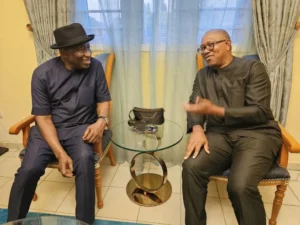
Their call followed a private meeting between Jonathan and Obi in Abuja, fuelling speculations about possible political realignments ahead of 2027.
A Meeting That Sparked Debate
The Thursday closed-door meeting, though shrouded in secrecy, set tongues wagging in political circles. Obi later described Jonathan on his X handle as “a very dear elder brother, statesman, and leader,” explaining that their conversation focused on the state of the nation.
But even before the dust settled, leaders of the Obidient Movement made their stand clear: Jonathan should act as a unifier, not a contender.
Dr. Yunusa Tanko, the National Coordinator of the Movement, told Daily Trust that while both men command respect, Obi is the preferred choice of Nigerians yearning for change.
“They have been friends for a long time. The meeting was for them to fraternise and discuss how to rescue Nigeria. But for us in the Obidient Movement, it would be great if Jonathan remains the respected statesman he is known for. He has done his best as president, he is respected, and this is the time for him to support his brother,” Tanko said.
The Call for Fairness
Tanko recalled that Obi once served on Jonathan’s economic management team and consistently stood by him while he was in office. By his logic, the time has come for Jonathan to reciprocate that loyalty.
The Obidient leader went further to accuse some political actors of attempting to use Jonathan’s name as a counterweight to Obi’s rising influence. “We are aware of such moves, but we strongly believe they will not succeed. Many Nigerians believe the next president should come from the South, and for fairness, the South East should get the chance. Peter Obi is the ideal candidate,” he declared.
The Dilemma of Two Heavyweights
Reports suggest that Jonathan and Obi have met at least three times since Easter to explore possible alignments. The stumbling block, however, is the same: which of them should yield ground to the other if a coalition is to be formed.
Both men draw significant strength from the South and Middle Belt, regions seen as decisive in national elections. Analysts warn that a divided opposition front could hand President Bola Ahmed Tinubu a smoother path to re-election in 2027.
Jonathan, courted by figures within the Peoples Democratic Party (PDP) and African Democratic Congress (ADC), is said to enjoy stronger appeal in the North. Obi, on the other hand, still rides on the momentum of the 2023 elections and the unrelenting energy of the Obidient Movement, which has proven to be one of the most vocal and organized grassroots networks in recent history.
What’s at Stake
The push for Jonathan to step down reflects broader debates about equity and representation in Nigerian politics. Many argue that after decades of marginalisation, the South East deserves a genuine shot at the presidency. For Obi’s supporters, he represents not only that regional aspiration but also a broader demand for accountability, prudent governance, and inclusiveness.
For Jonathan, the decision is more delicate. On one hand, he retains goodwill across parts of the country and within the international community. On the other, a comeback bid risks polarising opposition votes and diminishing the possibility of building a united front strong enough to challenge the ruling APC.
The Road Ahead
For now, Jonathan has not declared any intention to run, but the speculations around him show just how unsettled the opposition camp remains. Whether he will choose to contest or play the role of a statesman-kingmaker could shape the dynamics of 2027.
The Obidient Movement, however, is unequivocal. In their view, Obi has the political capital, credibility, and grassroots backing to take on Tinubu. They believe Jonathan’s best contribution would be to endorse Obi and help mobilize broader alliances across party lines.
Conclusion
The meeting between Peter Obi and Goodluck Jonathan may have been cordial, but it has laid bare the high-stakes calculations already underway. With the opposition’s chances hinging on unity, the question of who steps aside for whom could prove decisive.
As Nigerians continue to grapple with economic hardship and governance challenges, the hunger for an alternative remains strong. Whether Jonathan and Obi can agree on a single path forward may determine not only their political futures but also the trajectory of the 2027 elections.