SULE TO GOVERNORS:
Stop Passing Blame, Use Rising Revenues to Tackle Insecurity
By Danfodio Voice
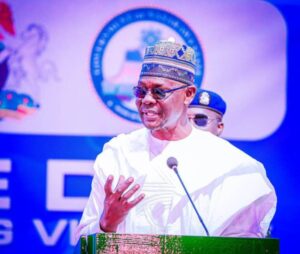
Nasarawa State Governor, Abdullahi Sule, has called on his fellow governors to take full responsibility for tackling insecurity in their domains, insisting that the unprecedented revenues currently accruing to states leave no room for excuses.
Speaking in Abuja on Monday at the 2025 Northern Nigeria Investment and Industrialisation Summit, Governor Sule said monthly allocations from the Federation Account have risen to historic levels under the fiscal reforms of President Bola Ahmed Tinubu’s administration. According to him, state governments now have more than enough resources to invest in security and economic transformation.
For the first time in our history, all tiers of government are sharing more revenue than they ever imagined, Sule declared. Over N2.2 trillion was shared this month alone. When I became governor in 2019, we were sharing between N590 billion and N620 billion. Today, it is four times that amount.
The governor argued that with such significant financial inflows, governors could no longer justify rising insecurity by pointing fingers at the federal government or security agencies.
Every state now has the resources to secure its people. We should stop blaming anybody for our security. If we are blaming anybody, blame ourselves, he said firmly.
Call for Strategic Investment
Sule urged northern governors in particular to channel their share of the windfall into critical sectors that would drive long-term economic stability. He highlighted mining, agriculture, and power as priority areas that could fast-track industrialisation and job creation if properly harnessed.
Governors in the region must look beyond recurrent expenditure and invest strategically. With the level of resources now available, we can transform our states into hubs of production, not just consumption, he added.
The Nasarawa governor shared examples from his own administration, pointing to progress in the solid minerals sector. He revealed that his government had compelled investors to establish processing plants in the state rather than simply extract raw materials for export.
As a result, Nasarawa now hosts a 3,000-metric-tonne-per-day minerals processing plant, with another 6,000-tonne facility completed and awaiting inauguration. This ensures more value is retained within the state and more jobs are created for our people, he explained.
Oil and Agriculture Prospects
Beyond mining, Sule said Nasarawa has confirmed oil reserves estimated between five and seven million barrels. Plans are underway, he noted, to deepen exploration and attract investors that would help boost Nigeria’s overall crude output while providing additional revenue streams for the state.
In agriculture, the governor highlighted efforts to expand rice cultivation from 3,300 hectares to 8,000 hectares before the end of his tenure. Agriculture remains the backbone of our economy. With the right investment, we can guarantee food security for our people and create wealth for our farmers, he stated.
A Summit on Opportunities
The Northern Nigeria Investment and Industrialisation Summit, themed Unlocking Strategic Opportunities in Mining, Agriculture and Power, brought together stakeholders from government, business, and development institutions. The event was aimed at identifying pathways for industrial growth in the region, which has long struggled with poverty and underdevelopment despite its vast natural resources.
Speakers at the summit stressed the importance of collaboration among states, particularly in addressing insecurity, which has disrupted farming and discouraged investment in several northern communities.
Just last month, the Federation Account Allocation Committee (FAAC) announced the disbursement of N2.22 trillion among the three tiers of government out of a gross total of N3.63 trillion. Analysts say such inflows, if properly managed, could significantly reduce Nigeria’s dependence on borrowing and foreign aid.
Rising Pressure on Governors
Governor Sule’s remarks add to a growing chorus of voices urging state governments to step up in the fight against insecurity. In recent years, banditry, kidnapping, and farmer-herder clashes have devastated large parts of the north, undermining food production and forcing thousands of people to flee their homes.
Critics argue that while federal forces bear much of the burden, state governments have often failed to complement those efforts with adequate local security initiatives. With allocations at record highs, expectations are mounting that governors will invest in better policing, surveillance technology, and community-based security systems.
A Challenge for the North
By framing insecurity as a matter of leadership accountability rather than external blame, Sule’s comments appear aimed at reshaping the conversation among northern leaders. His insistence that “every state now has the resources” sets a benchmark by which citizens may soon begin measuring the performance of their governors.
Political observers say the remarks could spark debate among governors who may not be comfortable with the idea of being directly held responsible for the security situation in their states. Nonetheless, the argument resonates with a population increasingly frustrated by insecurity despite rising oil earnings and federal allocations.
Conclusion
Governor Abdullahi Sule’s call is clear: with unprecedented resources at their disposal, governors can no longer afford to shift responsibility for insecurity. Instead, they must deploy funds wisely, strengthen local security systems, and invest in sectors capable of transforming the regional economy.
As Nigeria navigates its present security and economic challenges, the test for governors will not be how much money they receive but how effectively they translate those resources into safety, stability, and prosperity for their people.