Africa’s 10 Weakest Currencies: Challenges and Realities
In the global economy, currencies act as a mirror of a nation’s economic health, political stability, and financial discipline. In Africa, while some currencies remain relatively strong, many others struggle against the United States dollar. A weak currency means that more units of that local money are required to buy a single dollar, reducing purchasing power both at home and abroad.
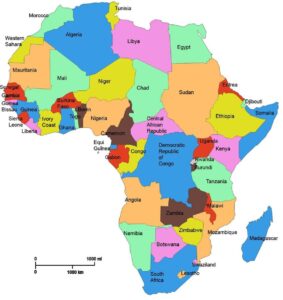
As of 2025, several African countries are grappling with depreciating currencies that reflect deeper structural and economic issues. Below is a look at the ten weakest currencies on the continent, their exchange rates, and the challenges behind their low value.
1. São Tomé & Príncipe Dobra (STN)
Currently exchanging at over 22,000 dobras to one US dollar, the São Tomé and Príncipe dobra is Africa’s weakest currency. The island nation’s tiny population and reliance on imports make it highly vulnerable. Limited export earnings, mostly from cocoa, are insufficient to sustain the economy, forcing the government to depend heavily on aid and remittances.
2. Sierra Leone Leone (SLL)
The Sierra Leonean leone trades at around 20,969 to the dollar. Despite rich deposits of diamonds and other minerals, the economy struggles with weak revenue generation, high inflation, and fiscal deficits. The re-denomination of the currency in 2022 offered temporary relief, but depreciation has continued, leaving many Sierra Leoneans facing rising living costs.
3. Guinean Franc (GNF)
Guinea’s franc sits at about 8,657 per dollar. Political instability and poor infrastructure have stunted the country’s economic growth. Though blessed with abundant mineral wealth, especially bauxite, weak governance and dependence on foreign companies to exploit resources have limited the benefits for the domestic economy.
4. Ugandan Shilling (UGX)
At about 3,606 per dollar, Uganda’s shilling is one of East Africa’s weakest currencies. Uganda has recorded steady growth in agriculture and services, but its reliance on imports, coupled with periodic inflation pressures, keeps the shilling under strain.
5. Burundian Franc (BIF)
Trading near 2,975 per dollar, the Burundian franc reflects the deep economic challenges of one of the world’s poorest nations. Political tension, limited infrastructure, and a heavy dependence on agriculture have left Burundi struggling to attract investment. The result is a currency persistently under pressure.
6. Congolese Franc (CDF)
In the Democratic Republic of the Congo, the franc trades at roughly 2,905 per dollar. The DRC is immensely rich in minerals such as cobalt and copper, yet corruption, governance issues, and reliance on commodity exports have made the franc volatile. Commodity price swings quickly ripple into currency depreciation.
7. Tanzanian Shilling (TZS)
The Tanzanian shilling currently exchanges at about 2,653 per dollar. Tanzania has enjoyed relative political stability, but its currency struggles with current account deficits and heavy reliance on imported goods such as fuel and machinery. Inflationary pressures occasionally weigh down the shilling further.
8. Malawian Kwacha (MWK)
The kwacha sits at about 1,733 per dollar. Malawi’s economy is heavily reliant on agriculture, particularly tobacco, which makes it vulnerable to climate change and global commodity price fluctuations. Frequent shortages of foreign exchange and periodic devaluations have kept the kwacha weak.
9. Nigerian Naira (NGN)
Despite being Africa’s largest economy, Nigeria’s naira is among the weakest, trading at roughly 1,553 per dollar. Structural issues such as over-dependence on oil, persistent inflation, dwindling foreign reserves, and a widening gap between official and parallel market rates have battered the naira. Recent reforms, including the unification of exchange rates, have yet to deliver long-term stability.
10. Rwandan Franc (RWF)
At about 1,448 per dollar, Rwanda’s franc closes the list. Though Rwanda has been hailed for economic reforms and stable governance, its currency remains weak due to a small export base and dependence on imports. Rising external debt also weighs on the franc.
Common Threads Behind Weak Currencies
A review of these cases reveals several recurring themes:
High Inflation: Persistent inflation erodes the value of local money, reducing purchasing power.
Dependence on Imports: Heavy import bills create continuous demand for foreign currency.
Commodity Dependence: Over-reliance on minerals or agriculture exposes currencies to global price shocks.
Low Reserves: Limited foreign reserves restrict the ability of central banks to defend their currencies.
Political and Governance Challenges: Corruption, instability, or policy inconsistency scare away investors.
Debt Pressures: Servicing large external debts drains foreign exchange and undermines confidence.
The Human Cost
Beyond the economic jargon, weak currencies translate directly into hardship for ordinary citizens. Imported essentials such as fuel, medicines, and food become more expensive, driving inflation higher. Families see their savings lose value quickly, while businesses that depend on imported inputs struggle to stay afloat.
Can the Tide Turn?
Some governments are pursuing reforms to strengthen their currencies. Measures include raising interest rates to fight inflation, diversifying exports, and attracting foreign investment. In Nigeria, for instance, exchange rate reforms and efforts to boost local refining of petroleum products are aimed at reducing pressure on the naira. In East Africa, countries like Uganda and Rwanda are promoting regional trade integration to stabilize their economies.
Conclusion
The weakness of many African currencies is a symptom of deeper structural challenges. Without tackling inflation, over-reliance on imports, governance issues, and weak export bases, these currencies will remain under strain. For millions of Africans, stabilising currencies is not just about improving exchange rates — it is about stabilising lives, making essentials affordable, and creating a predictable environment for growth.